If you thought the fun stopped in 2024 for Art For Fun, then you’d be wrong! In 2025, we held many special workshops and collaborations. To many in our group, it’s a testament to our growth and expanding reach across the borough.
January 2nd-23rd- The January Challenge
In January, we returned to the January challenge. If you don’t know what the January Challenge is, it’s a 30-day art challenge created by 64 million artists. Each day in January, you get a new prompt within an artistic medium, i.e. poetry or sketching. Last year, we had a lot of fun completing it with Zoe! And you can read all about it here.
Obviously, because we only meet once a week, we do the prompt that falls on a meeting day.
Our first prompt was Listen / Look Up by Anita Kambof. For this prompt, Sue asked us to step into the garden for a couple of minutes and draw what we saw. Once we did that, we went back inside and coloured it in. I thought it was a good prompt to make people more aware of their surroundings and to be more in the moment. Which makes sense for January, given it’s all about resolutions and starting anew. However, it wasn’t my favourite prompt in the challenge over the two years we’ve done this.
Here’s the link to the prompt and the 2026 version.
January 30th- Kurinuki w/ Mary Ward Centre
After we completed our version of the January challenge, the Mary Ward Centre returned! Which is always a lovely treat. On that day, we learned a new pottery technique called Kurinuki, in which you carve a pot from a solid block of clay. With western pottery, you don’t hollow out your objects; with Kurinuki, you hollow out or carve chunks from a solid block of clay, then remove the clay’s outer layers to change the design and create imperfections. Once you’ve cut the layers from the pot and let it dry, you can paint it. Typically, people use gold, but we mostly went for red and green.
Art For Fun’s experience with clay is minimal because traditional pottery is extremely expensive and requires Kilns. Which we don’t have access to. The last time we did anything with clay was back in February last year, when we made coil pots. You can read about the experience here.
The Kurinuki technique was much easier for many in the group, since we were working with a single mass of clay rather than trying to ensure every coil was even.
The process of painting the pot sort of reminds me of Kintsugi in the embracing imperfections part, except with Kintsugi, you’re fixing the pot with gold, not intentionally making imperfections.
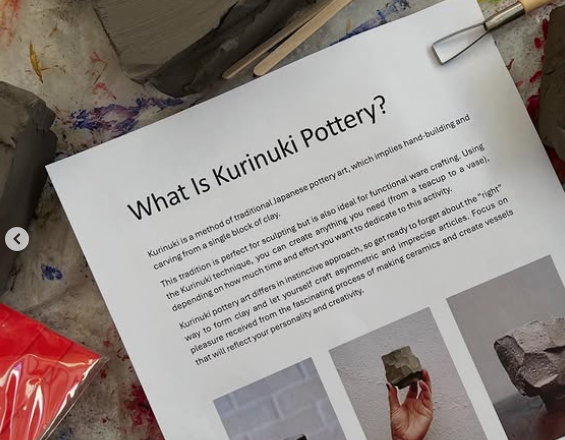
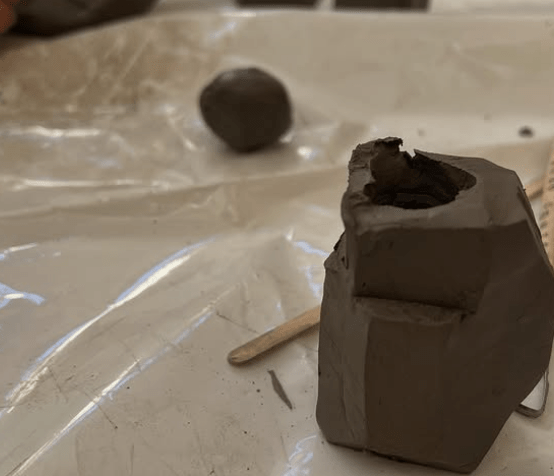
Here’s our Instagram post on the day.
In other news, during this month, Art For Fun was awarded a grant by L&Q to help run another monthly Art For Fun session in Beckton.
It runs on the first Tuesday of each month at the same time as the Thursday session. Please feel free to contact us via Instagram or email for more information.
25th February- Watercolour Workshop
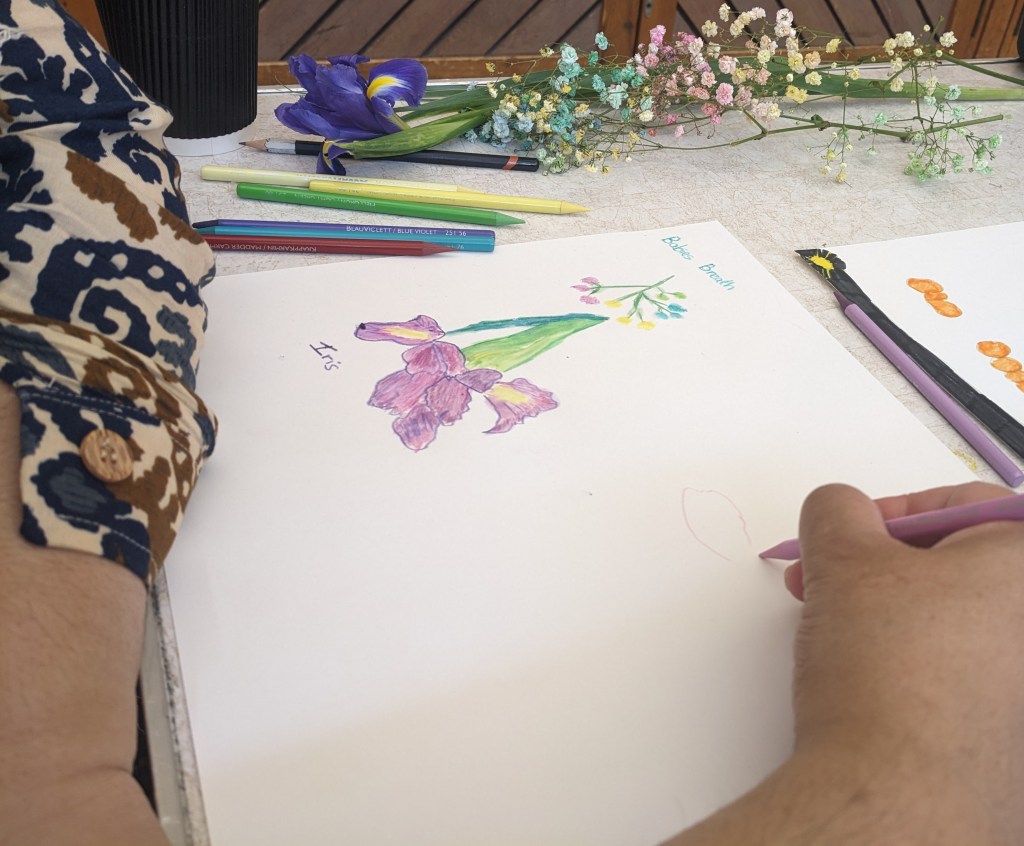
In February, we welcomed back Hanelle Levine as our workshop lead. If you remember, she taught us all about still life and how to find discernment!
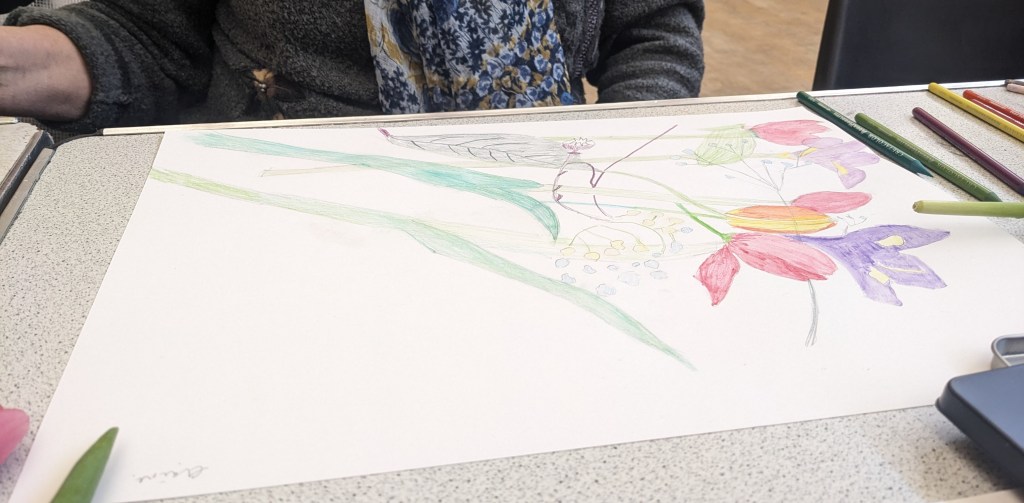
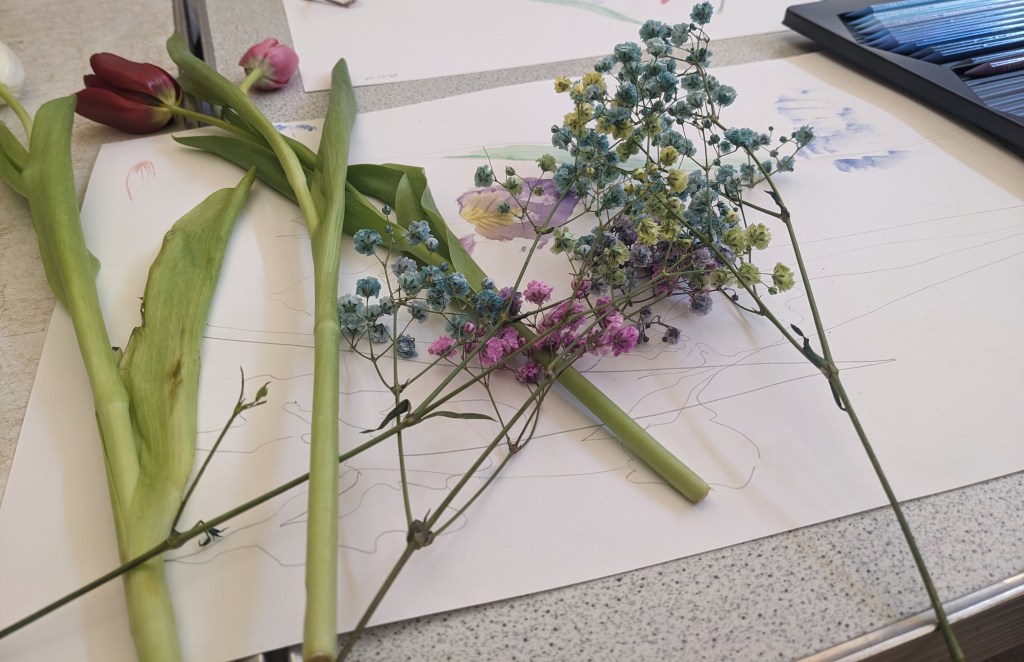
This time, we were focusing on improving our watercolour skills with flowers. We had all sorts of lovely arrangements on the tables that people could paint using the watercolours provided.
This workshop was right up our group’s alley because many of our participants absolutely love working with watercolours. I also think it was a good progression from the last workshop. Incorporating the skills we learnt working with still life and using it in another medium.
27th March- Food Memories
Dynamic duo Robert and Colin joined us for another workshop in March. This time we were tasked to think of our favourite memories of food- or our favourite food in general! And then, using paper and other materials, make 2 or 3D renditions of those foods, which were assembled on paper plates.
Click here to view the Instagram reel!
4th April- Beckton Panoramas
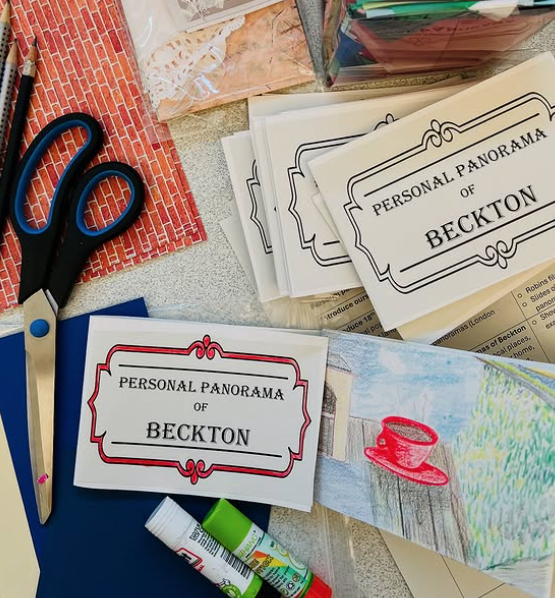
Back in 2024, when we won the PPP grant, we were invited to an event to meet other grant providers and groups. I met Marie from UCL Special Collections and put them in touch with our lead, Sue. Fast forward to now, and the Special Collections department wanted to collaborate with us on a workshop.
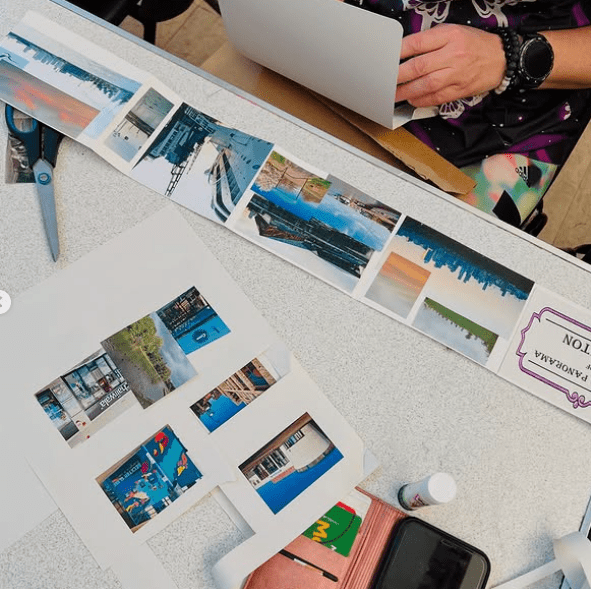
The workshop focused on Panoramas (which provide a wide, comprehensive view of an area). Specifically creating one of Beckton, people’s memories of the place, how it’s changed, and the areas we liked most. We had pictures of the area throughout history on the tables for visual reference. Some photos came from a book called Secret Newham by Malcolm Batten, which I also gave to Sue to photocopy for use.
We had technical trouble with the projector because the images weren’t loading clearly onto the walls, but we used a sheet of fabric to project them onto, and that worked wonderfully.
Overall, the workshop was a success, and it led to the UCL Special Collections department wanting to collaborate with us for a six-week project later in the year!
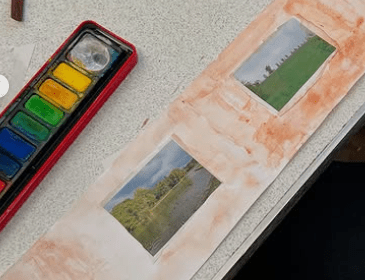
Here’s the reel for more pictures and videos.
12th June-Three Line Landscapes
Mary Ward Centre was back in June. For this workshop, we were inspired by Lebanese-American Poet and Artist Etel Adnan, known for using palette knives rather than paintbrushes, geometric shapes, and striking colours. She often addressed and criticised war and colonialism.
Our group were taught how to create landscapes using three lines. One line for the sun or moon, another as the horizon line and then a wavy line to act as a mountain or another focal point within the picture- then you paint it with saturated, highly pigmented blocks of colour.
It was a lovely workshop that broke down the simple elements of a landscape and taught us about a new artist.
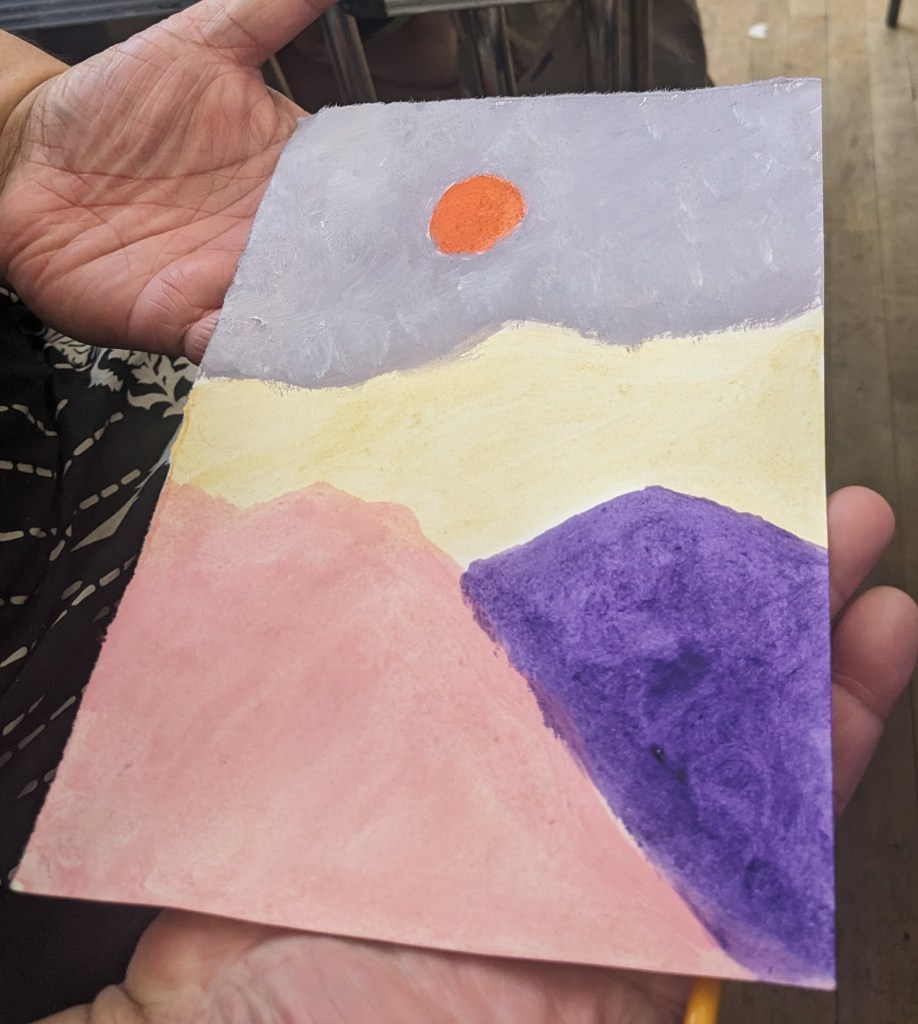
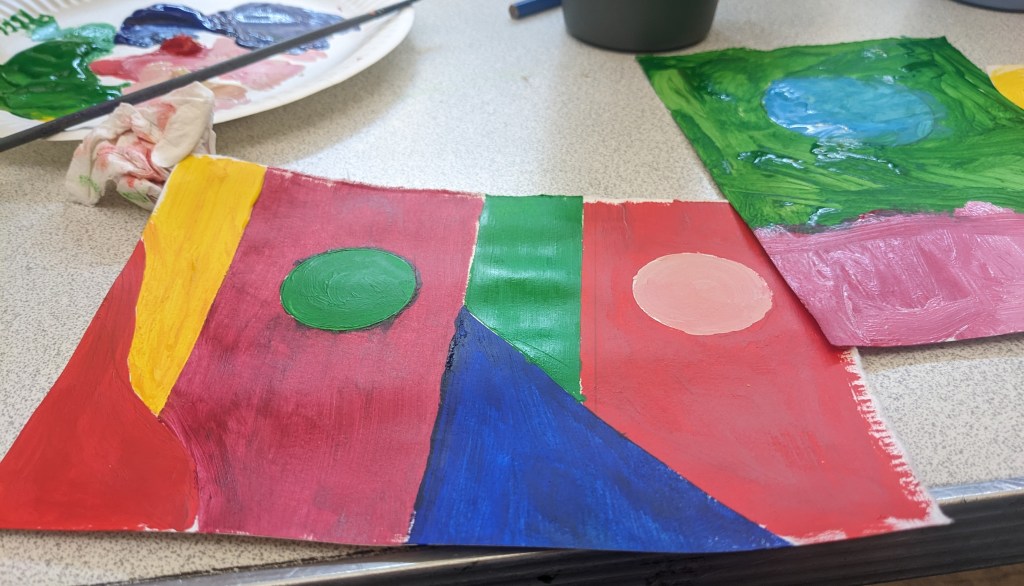
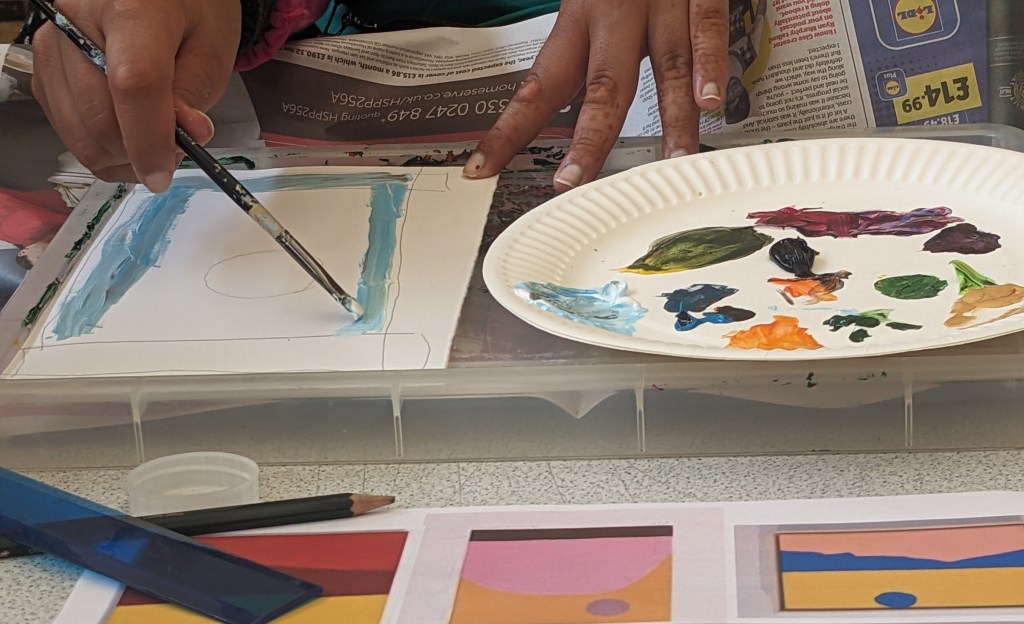
Click here to find out more about Etel Adnan and what inspired her work.
Click here for the reel of the workshop and here for even more photos.
10th July- Dreamcatchers
We welcomed a new artist to Art For Fun in July’s big workshop! Momtaz, a colour therapist, taught us how to create Dreamcatchers. We used materials like pre-cut shapes, coloured wool and feathers to bring our Dreamcatchers to life!
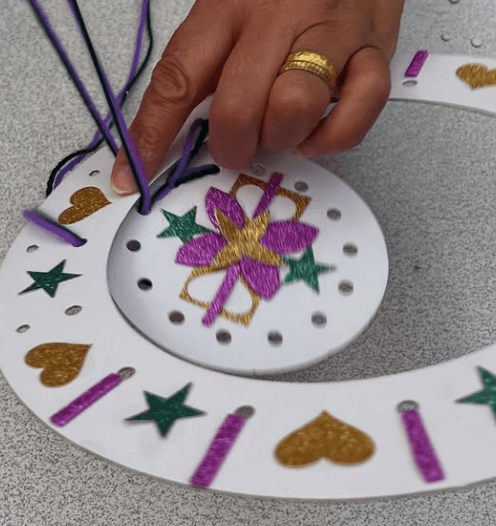
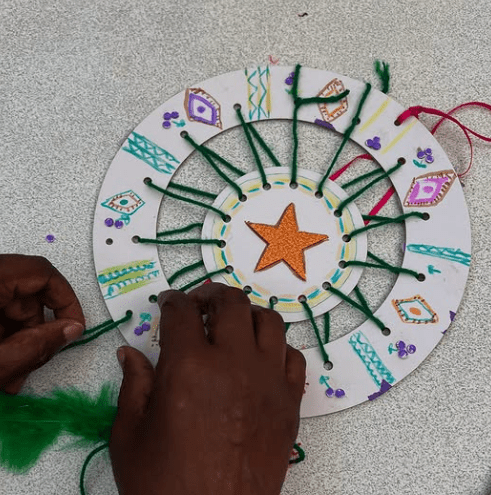
If you want to see more of Momtaz’s work, here’s her Instagram.
14th August- Aboriginal Art
Since we had a couple of quiet weeks at Art For Fun, Sue thought it would be a good idea to let us lead workshops of our choice until the next big workshop.
Frankie and I were delighted by the idea, as we always like helping out with the group, and we make the Tea and Coffee (admittedly, I hog that specific task). Or provide 1:1 support, so the next logical step would be to help lead sessions when possible.
I decided to be the first up for the lead role. I wanted to focus on Aboriginal Art. I chose Aboriginal Art because when I was in Year 5, I was part of an Aboriginal Art club, so I had an idea of how to make it work for an art group and create a sense of progression and freedom in the creation process. Plus, I knew this was a tradition and art form that I knew hadn’t been covered.
There were a couple of things I was highly aware of when preparing for this workshop:
- That I am not Indigenous Australian and am British, so my leading a workshop could be seen as insensitive- which was NOT my intention at all
- I hadn’t used this way of painting for a while; I needed to brush up on my knowledge!
To try to be as respectful to Aboriginal Art as a tradition and culture, I did as much research as possible (because, let’s be honest, taking part in an art class aged 10 isn’t going to cut it!) On the traditions, what they entail, and why. I made sure to explicitly highlight how important it is to Aboriginal Australian culture and its connections to storytelling for expressing knowledge of the land, dreams, events, and the beliefs of the Aboriginal community. As well as having symbols woven into the art pieces.
For the second point, reading up on the key research helped me brush up on my knowledge, but watching YouTube videos and looking at non-AI-generated images also greatly helped.
For the day, I had Sue bring in a variety of sticks for the workshop because I didn’t have an easy, safe way to get twigs.
I printed the visuals of some dot-painted Aboriginal Art and some made with other symbols, such as lines and arches. I also provided test sheets of paper so people could train themselves and figure out the best practices for applying acrylic paint to canvas paper with sticks. Obviously, because we have many elderly and disabled participants, dot painting with sticks was not an absolute requirement if they couldn’t do it that way or if we couldn’t find a safe way to adapt the stick-painting element for them.
I gave a speech about the importance of Aboriginal art, the key elements of storytelling, how the practice connects to the land and massive events; gave a demo; handed out paints, test paper, and guides; and, for the most part, let the group get on with things.
Many people in the group loved the workshop, and I loved leading it too! Although I did miss making the Tea and coffee. I’m not sure what I’d do as an activity for another workshop, but I’d do it again!
I do suggest reading more about Aboriginal Art, both because its traditions and culture are important and because the artworks are stunning!
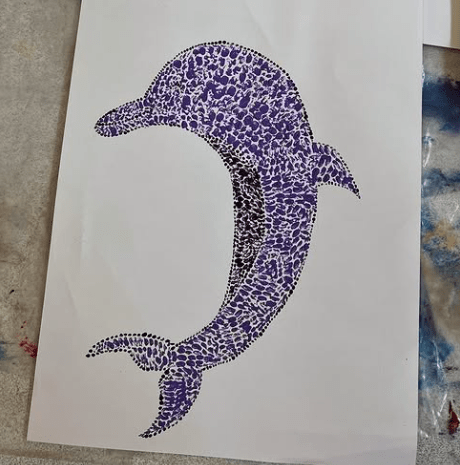
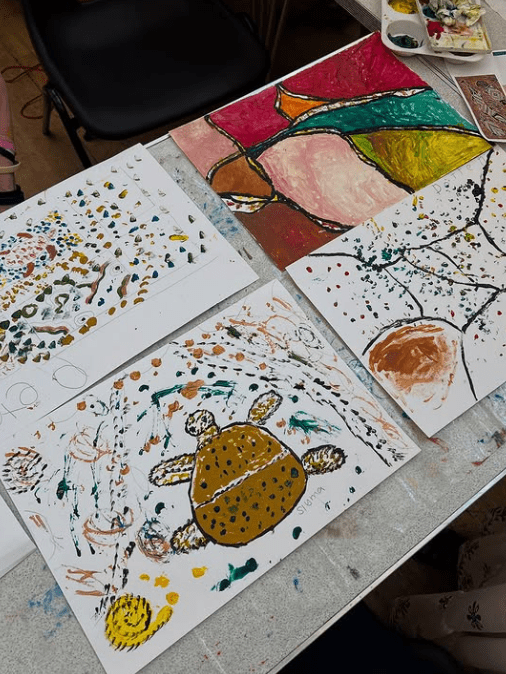
Click here to find out more about Aboriginal Art and to view some brilliant art!
And click here to see the awesome artworks we created.
21st August- Multimedia Beetle Workshop
Frankie, one of our volunteers and queen of art cupboard organisation, led that week’s workshop.
She took inspiration from nature, specifically Beetles, for our activity. We were asked to create Beetles using multimedia and collage supplies. However, participants preferred to draw and paint their Beetles for this workshop. We had many colourful creations that day! Some were blue, and some had feathers on to create a 3D effect.
Frankie also did extensive research for this workshop on Beetles and included many facts and pictures showing the species’ visual diversity. which helped inspire the participants.
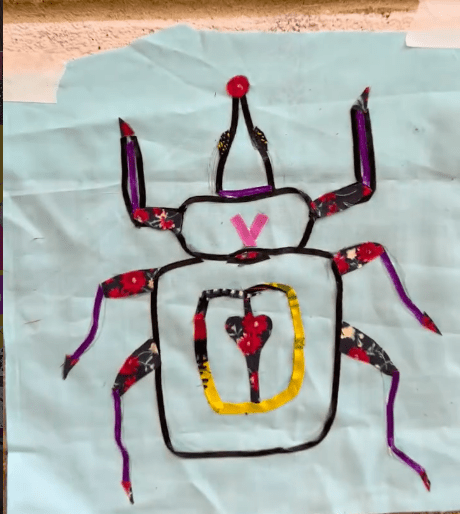
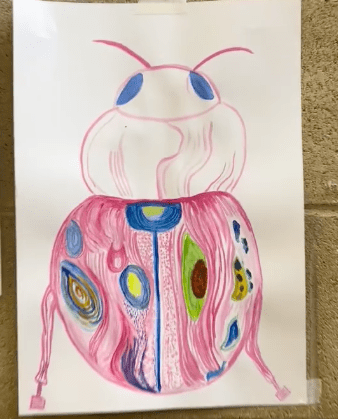
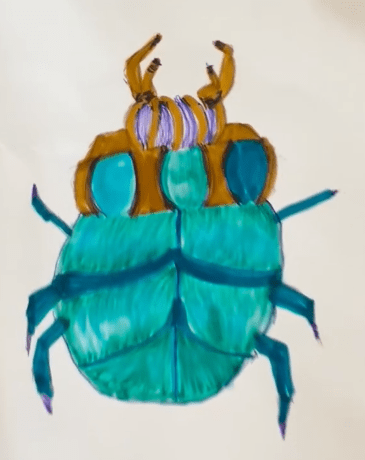
To see more, click here for the reel.
11th September- UCL Special Collections Trip
Rarely do Art For Fun get to go on group outings. They’re expensive, and unless we’re given a grant like the People Powered Places grant, they won’t happen. The only reason we were able to go to Chisenhale Hall last year and work with Nadine on fused glass was due to that grant, so we weren’t expecting a group expedition anytime soon.
However, because of our project with UCL’s Special Collections Department, we were invited to their building near the Olympic Park to meet some of the team and learn more about the secret six-week project!
To get there, we could easily get a bus and walk. Similarly, like at the fused glass workshop in December 2024, the groups were split into two to accommodate everyone.
When we were there, we had some hot drinks and Biscuits, just like a typical workshop! Then we were brought into the special collections room where we met the team: Vicky, Janine and Chelsie, who would be leading the project for the next six weeks.
This was where the special project was revealed! We were going to be working on our very own commonplace books!
What are Commonplace books?
I can already see you scratching your head, wondering what a Commonplace book is. Commonplace books are personalised notebooks that contain sketches, thoughts and bits of information curated to aid in knowledge or creativity. For example, one person could write about plants in London, the music they listen to, family recipes, or a family member and their life. In short its up to the owner! But they date back to the 16th century and were particularly popular in the 19th century and the Renaissance.
If you want an example, I decided to base my one around albums I like, and so I started drawing the covers onto my Commonplace book- alongside important information and tracks I liked and why. It’s sort of like a journal, really.
Here’s a blog post you might find useful!
The rest of the trip
After a crash course on what Commonplace books were and how they were used, we were allowed to look at some pieces in the Special Collections collection. There were all sorts of artefacts to look at, from artworks to fashion designs and poetry. We were also given small prints to take home from our outing.
The outing was special for our group as we got to collaborate with new people and build connections, and we also got to see artefacts and pieces in the collection, which we don’t often get to do. I know that I loved it as (and I am very aware no one asked) one of my favourite classes was History- even to this day, you stick a history documentary on, and I will be seated! For me (and I’m sure for many of our participants), learning about Commonplace books and looking at examples was exciting!
Everyone at Art For Fun would like to say a massive thank you to the Special Collections team, especially Vicky, Janine, and Chelsie, for having us and for this opportunity!
For our next session with UCL, the Special Collections team will be going to Art For Fun’s venue to continue the Commonplace Journals! But that will be explored in our blog update next week, as well as what we did for the Christmas period at Art For Fun! Next week You’ll also get our January update for 2026- so keep those eyes peeled on this blog!
Until then, why don’t you check out our Instagram? Thank you for reading, and we’ll update you soon 🙂
 Art For Fun